My Son's First Gaming Console is Retro (No Internet, Ads, or Predatory Mechanics)
The problem
I saw a baby on the subway playing with a tablet. Normal enough, until I looked closer: what was on the screen wasn’t the game their parent had (probably) installed. It was a playable ad — a slot machine, running inside the game, that the baby was tapping to spin. The baby kept tapping, hit the ad’s install button, went through the app store flow, and a few moments later was playing the slot machine game itself.
Parents aren’t the villains here, they’re just outmatched. Games that look fine can still have predatory mechanics inside (gambling/gacha, microtransactions, pay-to-progress energy bars, parasocial features, etc).
And worst of all: nearly all of them contain ads for other games, which can be installed from inside the ad. A few unsupervised taps and your kid is playing something you have never seen.
Kids mobile gaming is a mess
The numbers are bad. A 2019 content analysis in the Journal of Developmental & Behavioral Pediatrics coded 135 apps marketed to or played by children under five — 39 that children aged one to five were observed actually playing, plus the 96 most-downloaded free and paid apps in the “Ages 5 And Under” category. 129 of them, 95%, contained at least one form of advertising; among the free apps it was 100%. Ads turned up at the same rate in apps labeled “educational” as in everything else. And 7% hid ads behind misleading symbols or disguised them as gameplay items.
A 2022 study in JAMA Network Open went at it from the other direction: it looked at the apps 160 three-to-five-year-olds actually spent their time in, 133 of them, and found 80% of the children hit at least one app using manipulative design. A quarter of the apps used characters to apply social pressure when the child tried to stop. Nearly half made leaving hard, with no clear exit or screens that advanced on their own.
It does not improve with age, it just gets more expensive. A 2019 study of 1,155 sixteen-to-eighteen-year-olds found the link between loot box spending and problem gambling was of moderate-to-large magnitude — stronger than what had been measured in adults. Adolescents who bought loot boxes scored more than twice as high on problem gambling measures, and the ones who already scored as problem gamblers spent more than five times as much on boxes. This is not a fringe behavior: the UK Gambling Commission’s 2022 survey found 24% of 11-to-16-year-olds had paid to open a loot box, and 37% of boys had.
To be fair, the app stores ship protections: curated kids’ catalogs, content ratings, spending limits, and supervised child accounts. They work when they’re used but they’re opt-in, most parents never go looking for them. And in reality, most parents are just handing over their own unlocked phone to buy five quiet minutes.
What I wanted instead
I had a Game Boy growing up and loved it.
What made that experience amazing compared to today’s gaming ecosystem: No ads. No updates. No microtransactions. Getting bored of it was allowed. It wasn’t trying to keep me playing. It simply wasn’t predatory.
What I wanted from a ‘first’ device for my son:
- No ads. Any ad he can tap is a potential install he can make.
- No purchases. No games with in-game purchases.
- No network. No internet connection at all.
- No ability to play anything other than what I put on it.
My son is one. He can’t play any video game yet, and won’t for a few more years. But I love games, I want him to love them too.
The device
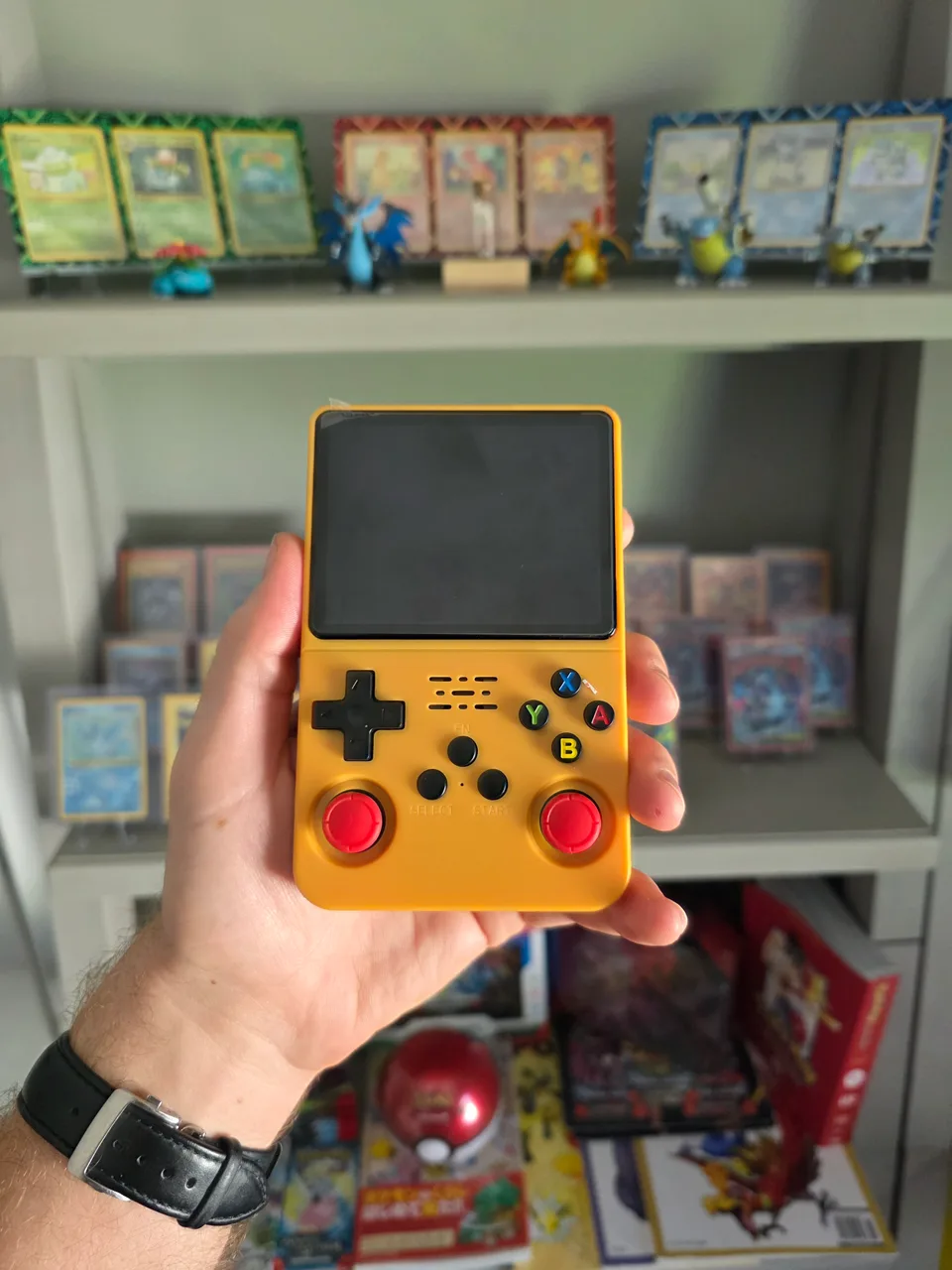
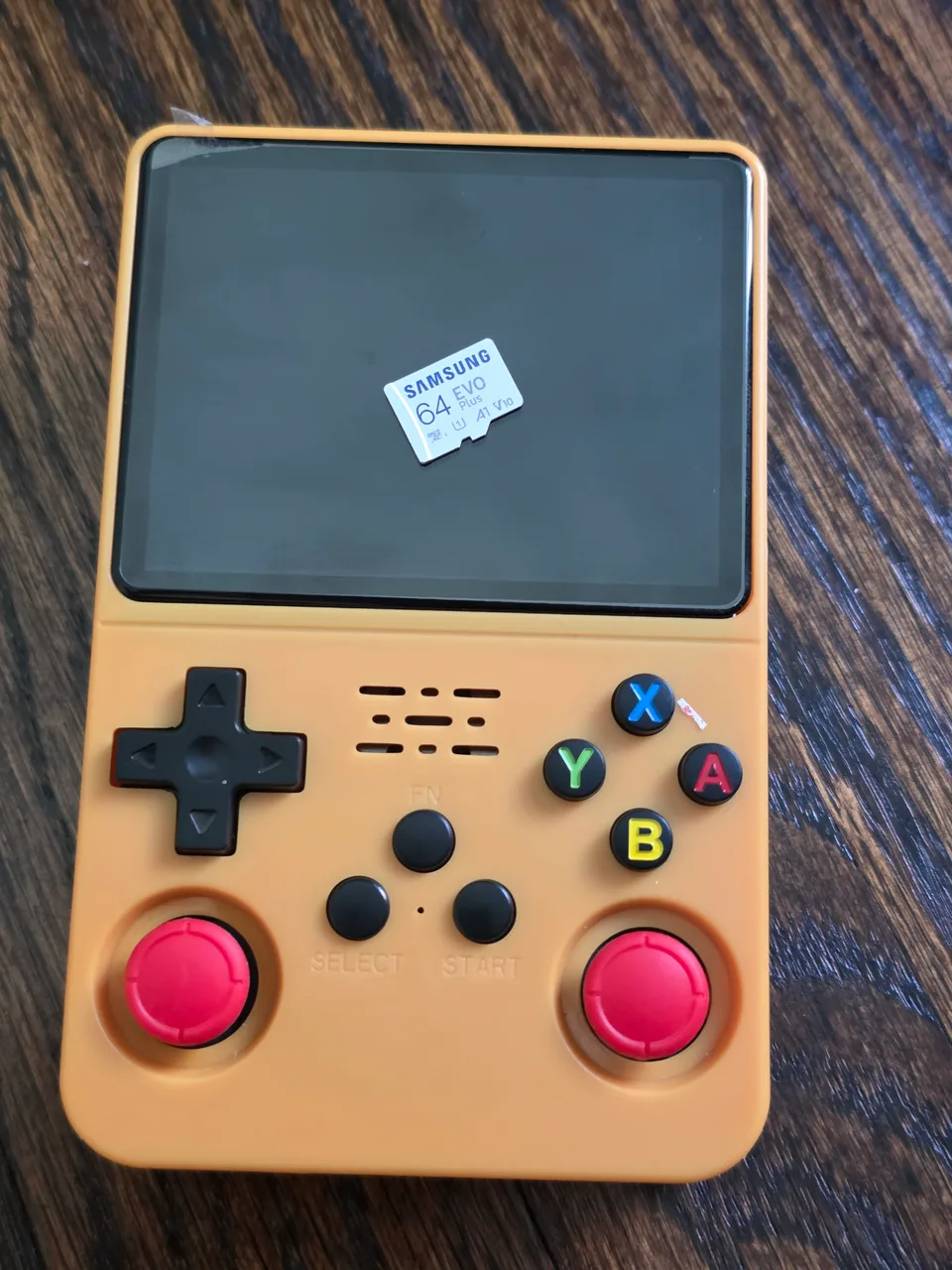
After digging around, I ended up buying an R36S for $35 and an SD card for another $10.
It has no wifi hardware: there is no radio in the thing at all.
It did not arrive ‘ready to go’. Like most of these handhelds, it shipped with a cheap/flaky memory card holding well over a thousand games (many not suitable for young kids) and a bad OS. I wiped it all and installed ArkOS from scratch.
In terms of games, what’s left is a short list I picked deliberately.
What it isn’t
It’s not actually vintage hardware. It’s emulation on a cheap board from a no-name company. Authentic versions exist (Analogue Pocket, ModRetro Chromatic, etc) which use real cartridges…but they cost about six times what the R36S did.
$45 buys what I needed to recreate the magic of my childhood Game Boy.
Downsides
- Does not work ‘out of the box’.
- ArkOS setup was fiddly.
- Cheap hardware with no official support.
- He’ll want what his friends have eventually. Peer pressure sucks.
- Untested because he’s one (I tested it but that doesn’t count).
The point
Same instinct as the year I spent filling a complete Pokédex TCG binder: build one finished, curated thing and hand it over.
It might not work. He’s under no obligation to care about games at all, and that’s fine. But if he does, I want the first thing he plays to set the bar for what a good gaming experience feels like.
I’ll report back in 2-3 years.
Written in a personal capacity; the views here are my own.